
APIs Overview
Climate Forte Weather API – Overview & Getting Started
Improve Business Operations
Whether you’re aiming to ensure employee safety, alert customers of future weather events, or incorporate more reliable weather data in your own software application, the Climate Forte Weather API offers a comprehensive collection of ultra-accurate data organized into endpoints for the utmost ease-of-use and efficiency.
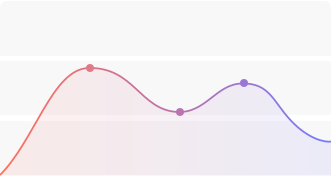
Plan your operations
Use weather forecasts to view the future and how the weather will impact your operation, infrastructure, and service areas.
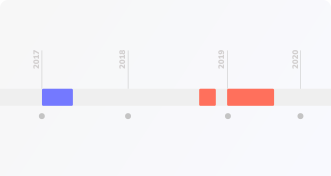
Validate & research historical data
Analyze past events for trends and patterns in order to optimize future operations, validate weather impact, and how your business performance was affected.
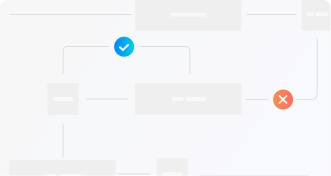
Make better decisions through insights
Set rules and thresholds over weather data to gain business insights and focus on what matters the most when making decisions.
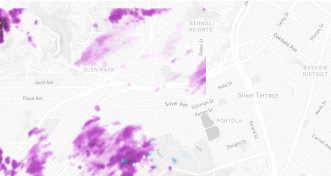
Bring weather data to life with custom visualizations
Visualize weather data on your app and website to provide a highly accurate, custom view of weather conditions.
Prepare for the next weather event
Generate proactive alerts for weather events before they happen to better prepare and mitigate risks around unique conditions, hazards, and more.
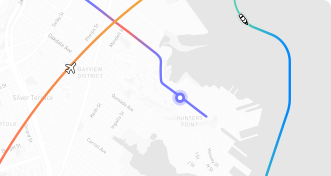
Fly, drive, and sail safely
Know what to expect along navigation routes to avoid shipping delays and increase the safety of your team, customers, and cargo.
Data Catalog
With more than 80 different data fields, including weather, air quality, pollen, road risk and fire index, you can build almost anything. Improving your project with the Climate Forte Weather API.
Air quality
Understand what precautions to take with respect to pollution, meet EPA standard regulations, and plan your outdoor activity.
Read MoreFire
Estimate fire danger. Know when and where fire or smoke could impact operations or communities to help increase safety for staff members and local residents.
Read MoreCore
See all types of weather core data like precipitation, temperature and other Core Weather data layers.
Read MoreSoil
Moisture and temperature soil data to help plan agriculture water consumption and railroads risks.
Read More